
The global climate is changing, with numerous and complex implications for health. Yet, many of the health threats of climate change are poorly understood and remain on the margins of the global climate discourse. In recognition of this, the Duke Global Health Institute has launched the Climate and Global Health Initiative to advance understanding of climate-health impacts while prioritizing health equity and environmental justice. The Initiative functions as an interdisciplinary hub, bringing together experts from health, life, social, physical, and human sciences to accelerate research and action. Through this collaborative approach, the Initiative seeks to expand climate-health knowledge; develop and deploy evidence-based adaptation and mitigation strategies; influence policymaking; and develop the next generation of climate-health leaders equipped to address these challenges.
Research News
DGHI to Launch Global Network of Climate Observatories
Focused on regions with long-term partnerships, the observatories aim to advance research and education on the health impacts of climate change.
Read More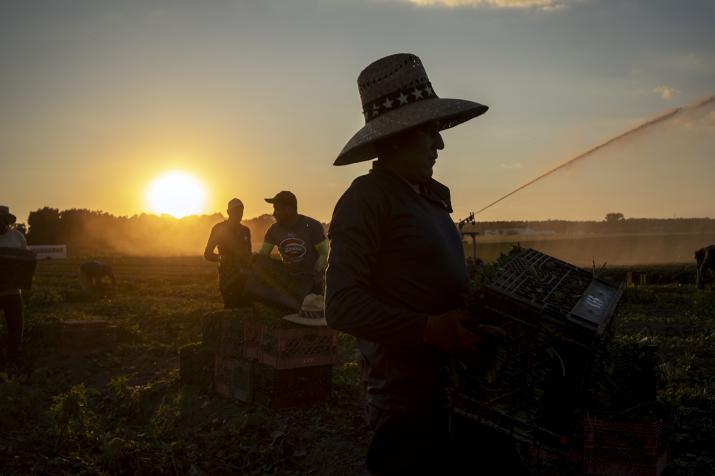
Regional Observatories
A central objective of the Climate and Global Health Initiative is to form regional climate and health observatories. The observatories are envisioned as evolving, interdisciplinary spaces that convene researchers and practitioners with place-based expertise in public health, data science, epidemiology, climate change, environment, and policy. Regional climate and health observatories will be located in North Carolina, the Amazon Basin, East Africa, and Southeast Asia. These observatory locations leverage established partnerships and collaborations between Duke faculty and local partners and are also regions and communities with significant vulnerability to health effects of climate change. Within each observatory, the Initiative will catalyze and facilitate research, support development of educational programming, and build collaborative interdisciplinary networks focused on climate and health. To amplify impact, the Initiative will support cross-site scientific collaboration to ensure knowledge-sharing and accelerate research that informs health-protective adaptation and mitigation efforts.
Creating Analytic Infrastructure
A secondary objective of the Climate and Global Health Initiative is to build robust data management and sharing infrastructure to house climate-health relevant datasets and facilitate reproducible research. This infrastructure will use best practices and processes for data storage, governance, and use to develop a rich resource for researchers, learners, and communities of practice within and across the climate and health observatories.
Developing Human Capacity
The Initiative will additionally prepare researchers, practitioners, and learners for climate and global health-related work through teaching climate change and health courses, developing targeted educational resources, and facilitating connections to translational research and policy-engagement resources at Duke. This will ensure that investments are relevant to partners outside of academia and supports effective communication of key research findings that help protect health and inform policymaking around climate change and global health.
Faculty and Staff
The Climate and Health Initiative draws on a broad range of expertise from Duke’s campus and globally. See listed below key Initiative faculty and staff.

Mercedes Bravo
Associate Director for Community, Duke Global Health Institute

Marc Jeuland
Professor in the Sanford School of Public Policy

Chris Beyrer
Director, Duke Global Health Institute

Wendy Prudhomme O'Meara
Deputy Director, Duke Global Health Institute

Emily Robie
Research Analyst

Aunchalee E.L. Palmquist
Director of Graduate Studies, Duke Global Health Institute

Avi Kenny
Assistant Professor of Biostatistics & Bioinformatics

João Ricardo Vissoci
Associate Professor in Emergency Medicine

Tom Carpino
Postdoctoral Associate
Contact
Interested in learning more about what is happening in climate and global health at Duke? Check back here for updates and event announcements or contact our research program leader directly with any questions or comments about the initiative and its work: emily.robie@duke.edu