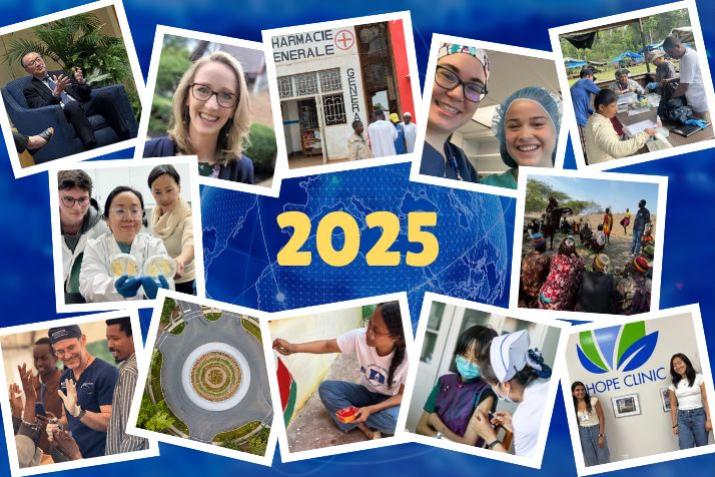
Is it over yet? The past 12 months have brought so many seismic shocks to global health that many in the field would no doubt prefer to forget 2025 ever happened. But before we close the book on the year, we’re taking our annual trip down memory lane to revisit some of the stories we’ve shared about DGHI’s work since the year began. And while there’s no diminishing the unprecedented challenges the year brought, these stories offer a timely reminder of the creativity, resilience and passion that permeates our community. This list includes researchers who are doggedly pursuing answers to complex health problems that too often are ignored, students who are continuing to have life-changing experiences in the field and finding creative ways to make a difference, and leaders who inspired us with words of courage and hope. So enjoy this look back on a year that offered many obstacles – but also many reasons to believe that we will continue to make progress despite them.
Choosing Hope
When Partners in Health (PIH) cofounder Jim Yong Kim, M.D., Ph.D., visited Duke in April, he came with a message rooted in his long career delivering healthcare to some of the world’s poorest people. But in the context of global health’s current challenges, it felt like a rallying call for the future. “When you are faced with poverty and disease … optimism is not the result of didactic analysis,” Kim said during DGHI’s Victor J. Dzau Distinguished Lecture in Global Health. “Optimism is a moral choice.” Throughout the event, Kim recalled the unwavering commitment of PIH cofounder and Duke alumnus Paul Farmer, M.D., Ph.D., as an enduring lesson for global health leaders to never accept the status quo.
For more about Farmer’s career at Duke and how his lessons continue to shape DGHI’s approach to education, be sure to watch DGHI’s new documentary video, “A Global Vision: Duke, Paul Farmer and the Future of Global Health,” which was previewed at the Dzau event.
Alumni Stories
The Moral Choice of Optimism
Partners in Health cofounder Jim Yong Kim speaks about how Duke changed Paul Farmer,...
Read More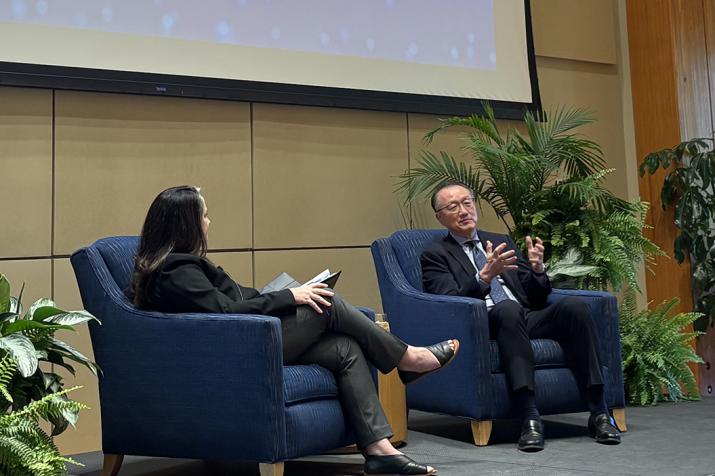
Lives in the Balance
It isn’t always easy to see the impact of policy decisions on people’s lives, especially when those people live thousands of miles away from where decisions are made. After the U.S. State Department paused nearly all U.S. foreign aid programs on Jan. 24, DGHI’s Emily Smith, Ph.D., used her “Friendly Neighbor Epidemiologist” blog to share a moving conversation with DGHI colleague Dorothy Dow, M.D., who leads a program supporting adolescents living with HIV in Tanzania. Dow spoke achingly of her worry that her patients would lose access to the medications that keep them alive, saying that “people are dying while we’re figuring this out.” While some life-saving programs were eventually allowed to continue, Dow’s personal perspective offered a powerful reminder that we should never lose sight of the people whose lives were disrupted by the abrupt shift in policy.
Commentary
'People Are Dying' Without U.S. HIV Funding
In Tanzania, DGHI professor Dorothy Dow is already seeing an impact from the U.S. foreign aid freeze. She says a long-term loss of HIV support would be devastating.
Read More
A New Way Forward
Among the U.S. government programs cast into doubt by the new administration’s moves was PEPFAR, the President’s Emergency Plan for AIDS Relief, which provides HIV prevention and treatment for more than 20 million people across 50 countries. As Congress deliberated PEPFAR’s future in March, a group of DGHI researchers – led by DGHI director Chris Beyrer, M.D., and postdoctoral fellow Jirair Ratevosian, DrPH – came together to brainstorm ways to make the program more efficient and sustainable. Their report outlined five recommendations to streamline program operations and better position it for a new era of global HIV prevention, an analysis that has helped shape conversations in Washington and beyond about how to continue the celebrated program’s life-saving mission.
Commentary
Envisioning the Future for a Celebrated Global AIDS Program
Duke researchers issue recommendations to prepare PEPFAR for a new chapter in global...
Read More
Doctor in the Delta
“Global health isn’t just international,” Nina Ragunanthan, M.D., says in our February alumni spotlight. “It’s about addressing disparities wherever they exist.” This observation frames a heart-warming story about Ragunanthan’s work as one of only two OB/GYNs in a rural county in the Mississippi Delta. She shares how she and her husband, Braveen, were deeply affected by a community-service project in the Delta as Robertson Scholars and felt a call to return after graduating from Duke in 2012. It’s a great example of how global health education can be applied to address the health challenges faced by rural and disenfranchised populations in the U.S.
Alumni Stories
Alumni Spotlight: Nina (Woolley) Ragunanthan BS’12
As one of just two OB/GYNs in her rural county, Ragunanthan brings a global health...
Read More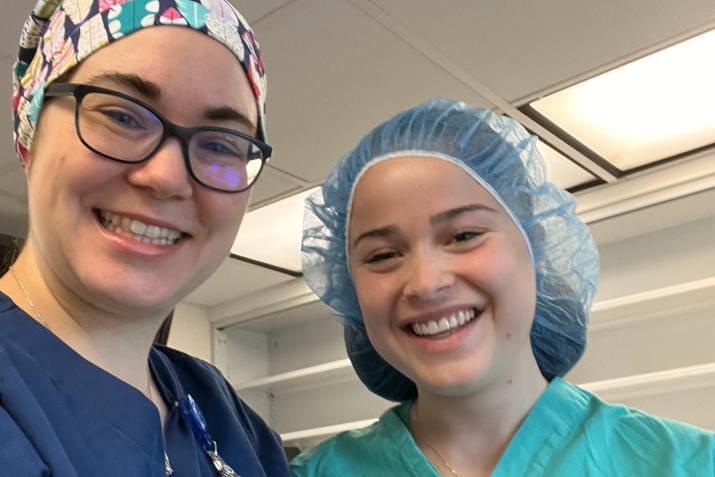
Beating the Heat
For thousands of years, the pastoralist communities that tend animals on the arid rangelands of northern Kenya have coped with weather extremes, including intense heat and prolonged drought. But as climate change forces many pastoralists to give up their traditional lifestyles, there’s growing evidence that settling in towns isn’t making them healthier or less prone to climate shocks. This article looked at two DGHI research projects in the fragile region that are seeking to create health interventions that acknowledge and protect pastoralist communities’ time-tested strategies for survival. You can also read more about the promising results of one of those projects – which reduced cases of seasonal malaria among children in the region by 70 percent – in this report from January.
Research News
Lessons in Resilience From One of the Hottest Places on Earth
Pastoralist animal herders in northern Kenya endure some of the harshest conditions on the planet. But efforts to improve their health may be undermining their most successful survival strategies.
Read More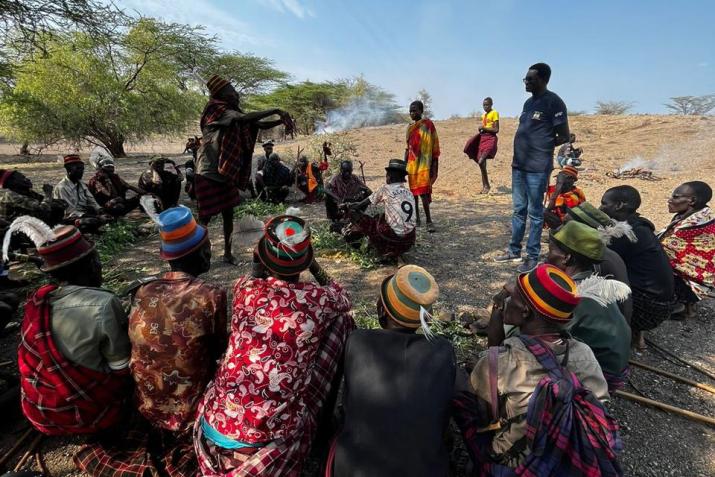
Respect for a Neglected Disease
No one embodies the plucky resolve global health will need to sustain progress more than Thuy Le, M.D., Ph.D. An infectious disease doctor and DGHI faculty member, Le has spent the past 15 years working relentlessly to bring more scientific attention and resources to fighting talaromycosis, a rare fungal disease that occurs most commonly in patients with advanced AIDS. Our story from July highlights promising research Le and her team published on ways to speed up diagnosis of the disease, which kills one in four people with the infection. But it’s also a testament to Le’s refusal to accept that medicine and the global health research community can’t do better for those patients.
Research News
Rapid Diagnosis for a Disease Where Delay Can Be Deadly
Duke scientists develop a diagnostic tool for a rare fungal disease that could shave...
Read More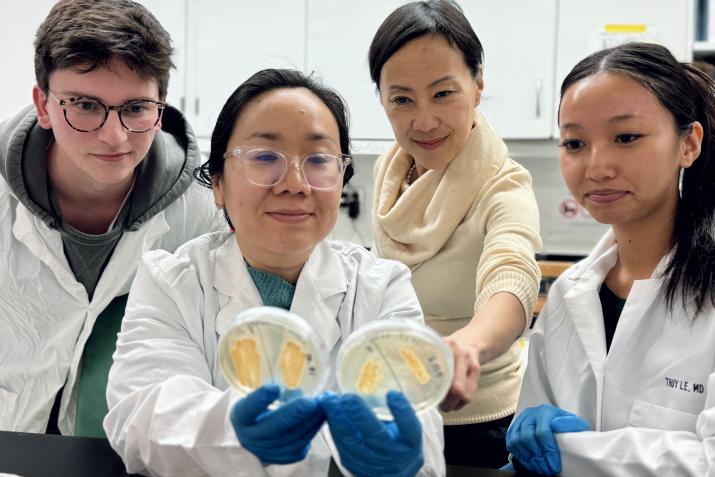
Bringing Global to Local
Residents of North Carolina’s Pamlico County may not have known what to make of the Duke students who began turning up in their rural county four summers ago. But DGHI’s summer research program, the brainchild of adjunct professor and Pamlico resident Diana Silimperi, M.D., has grown into a model of community engagement. Students have helped county officials evaluate options to improve health access for the county’s remote and vulnerable populations, and they’ve led campaigns on issues such as heart disease and storm preparation. But our story about this summer’s research team suggests the success of the project may come down to something even simpler: the growing trust that has developed between students and the communities they hope to serve.
For more insightful reflections from the field, see this blog, in which five undergraduate students share inspiring moments and life-changing lessons from global field experiences.
Education News
Students Aid Rural Pamlico County in Improving Health Access
Now in its fourth year, DGHI’s summer student research project may offer a template...
Read More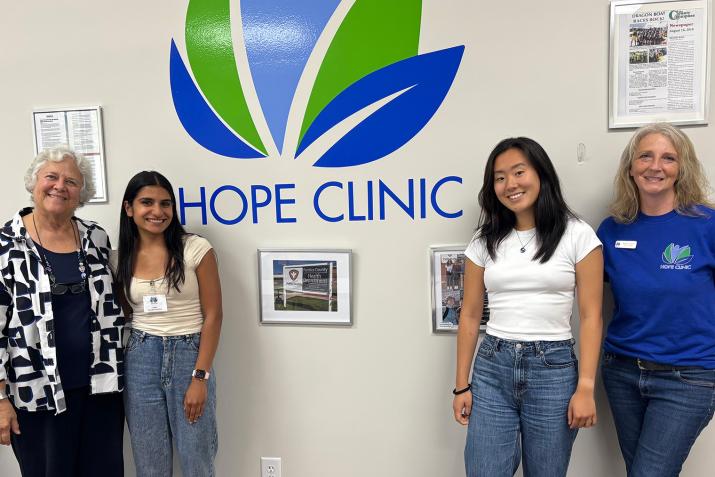
Game On
After witnessing the widespread hoarding of vaccines and medications by wealthy nations during the COVID-19 pandemic, global health officials have been searching for models that might ensure more equitable distribution of the tools countries need to fight disease outbreaks. One promising strategy has come from a unique collaboration between David McAdams, Ph.D., an economist, and Gavin Yamey, M.D., an expert on global health policy. This article, part of the Intersections at Duke series highlighting interdisciplinary collaboration, explains how McAdams and Yamey, both DGHI professors, applied game theory to design incentives for wealthy countries to share vaccines in exchange for pathogen data. It’s a compelling example of two seemingly disparate areas of knowledge aligning to address a complex question that is at the heart of preventing future pandemics.

Predicting Malaria with Data
Academic researchers like to talk about the power of big data, but how often does number-crunching let you see a problem before it happens? That’s the magic of a malaria early warning system developed by DGHI professor William Pan, DrPH. This fall, Panama and Honduras became the first two countries to adopt the system, which uses real-time climate, health and environmental data to predict when and where malaria outbreaks will occur. Our August article explains why that could be a critical step to regain progress on malaria eradication in Central America – and to close a potential route by which malaria might spread into the U.S. Pan’s research on environmental health in Central and South America is also helping drive the launch of four regional climate observatories, a central part of DGHI’s effort to advance research on the health impacts of climate change.
Research News
Two Countries Adopt Malaria Forecasting System Developed at Duke
The tool, which uses AI and climate data to predict when and where malaria outbreaks...
Read More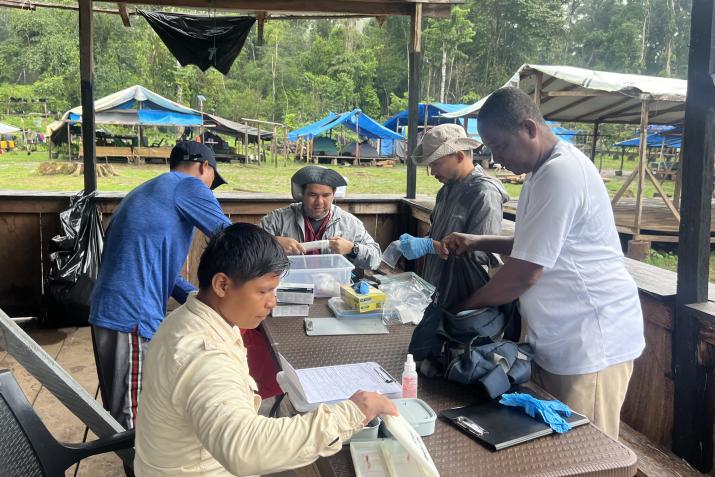
Inspiring Vision
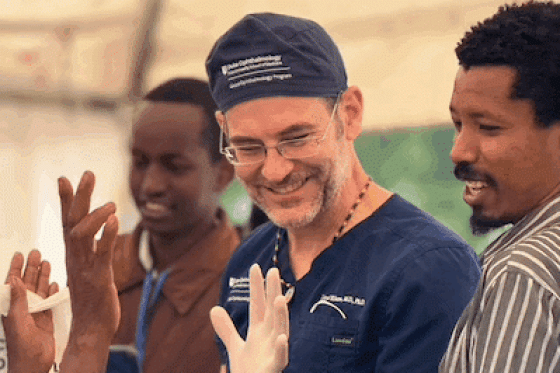
As he does pretty much every year, Duke eye surgeon Lloyd Williams, M.D., Ph.D., a DGHI affiliate faculty member, spent 2025 crisscrossing the globe to perform cataract surgeries and corneal transplants in underserved regions in Africa, Asia and Central America, restoring sight to hundreds of people with preventable blindness. In August, the American Academy of Ophthalmology recognized Williams’ extraordinary clinical work with its Outstanding Humanitarian Service Award. But it’s not just the surgeries that make Williams’ relentless efforts exemplary: it’s his dedication to training and local empowerment. Read more about his inspiring work in this announcement from the Duke Eye Center, and also in DGHI’s 2022 article about how he is working with ophthalmologists in Sierra Leone to transform eye care in the country.
Thinking Small
It’s always inspiring to hear from our amazing students, whose talents and boundless energy fuel our belief in a brighter future. But Sydney Chen’s September blog about a student project in Kisumu, Kenya, had an even more timely message. Chen, who graduated in May, was part of a team that helped launch a childcare center in a local hospital, giving young mothers a place to drop their children while they attend medical appointments. While such small-scale, DIY-style projects can’t begin to offset the wider cuts to global health funding, Chen writes that they still offer an avenue to make a difference. “This is where I found hope,” she writes. Read her essay, and you’ll no doubt feel the same way.
Voices of DGHI
Small Projects Can Still Make a Big Impact on Global Health
Our work to establish childcare centers in Kenya helped me see a hopeful path despite the challenges to our field.
Read More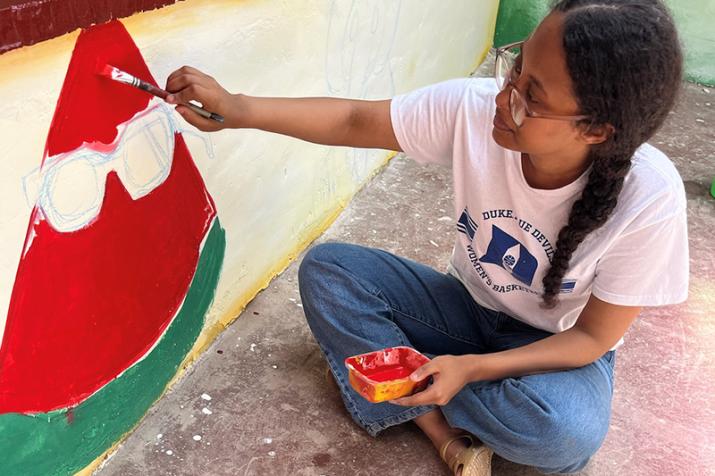
A Win for Vaccine Access
Our final choice from the past year is a story about playing the long game. For more than a decade, Shenglan Tang, M.D., Ph.D., and his colleagues at Duke Kunshan University have been patiently gathering evidence to demonstrate the benefits of adding four key vaccines to China’s national immunization program, which has not been expanded since 2008. In November, those efforts were rewarded, as China announced it would provide free HPV vaccines to girls beginning at age 13. The move is a milestone in the global effort to eliminate HPV-related cases of cervical cancer and a long-anticipated payoff to years of steady research from Tang and his team, who are already turning their attention to the three remaining vaccines missing from China's program.
Research News
The Evidence That Drove China's Big Move on HPV Vaccines
A Duke research team produced some of the key findings that led to the first...
Read More